A 90-degree elbow is not specified correctly by size and angle alone: thread standard, outlet connection, pressure, temperature and installation clearance determine whether it will seal and survive service. By the end, you will be able to compare brass female elbow options in Delhi, confirm physical fit, and write a purchase request that prevents a visually similar but incompatible fitting from reaching your machine.
Key takeaways
- Confirm NPT, BSPT, BSPP or metric thread before comparing elbows.
- Match the elbow to tube outside diameter and available wrench clearance.
- Check pressure, temperature and air-quality limits for your system.
- Seal, tighten and leak-test the finished pneumatic connection.
Specify the Thread and Outlet Before Comparing Elbows
A pneumatic brass female elbow is distinguished by its female thread standard, thread form, outlet interface, size, pressure rating and temperature range. “1/4-inch brass elbow” is not enough: that description could mean 1/4-inch NPT, BSPT, BSPP, a metric thread or a tube outlet.
| Specification | What to state | Why it matters |
|---|---|---|
| Thread standard and form | ASME B1.20.1 NPT; ISO 7-1 Rc female; or ISO 228-1 G female | NPT, tapered Rc, and parallel G threads are not interchangeable |
| Female thread size | For example, 1/8, 1/4 or 3/8 inch; include metric designation where applicable | Nominal size alone does not confirm pitch, flank angle or engagement |
| Outlet type and size | Male pipe thread, push-in PU tube port, hose barb, compression fitting or ferrule; state tube outside diameter | Each outlet needs a different mating part and installation method |
| Working conditions | Manufacturer’s working pressure at the intended air temperature | The rating belongs to the complete assembly, not to brass alone |
| Flow data | Nominal flow or effective orifice | An elbow adds directional loss and can slow actuator filling |
Do not treat a female-thread-to-tube elbow as interchangeable with a female PU connector. The tube end may use a collet and seal, while the connector may require a different thread or tube diameter.
Also confirm whether the G thread needs a gasket, bonded seal or O-ring; it does not seal like a tapered BSPT or Rc thread. Compare the 90-degree brass female elbow’s height, port-to-port dimensions, hex size and wrench access before ordering, so tightening does not twist the tubing.
Check Tube Size, Port Dimensions and Wrench Clearance
A physical fit depends on thread geometry, tube outside diameter and installation clearance—not the label “1/4-inch.” Confirm the mating port and outlet dimensions before ordering a brass elbow fitting in Delhi.
- Identify the female thread standard: ASME B1.20.1 NPT, ISO 7-1 Rc/BSPT, ISO 228-1 G/BSPP, or metric. Check whether it is tapered or parallel; 1/4-inch NPT does not mate correctly with 1/4-inch BSPT or G.
- Verify the mating male thread from the manifold drawing, existing fitting or a thread gauge. Record nominal size, pitch or threads per inch, and usable thread engagement.
- Specify the outlet separately. A female-thread-to-male-thread elbow is not interchangeable with a female-thread-to-tube version ending in a push-in, compression, ferrule or hose-barb connection.
- Measure the pneumatic tube’s outside diameter with calipers. A 6 mm tube needs a 6 mm tube connection; a 1/4-inch tube connection is a different size.
- Compare the elbow’s overall height, port-to-port length, 90-degree orientation and hex size with the available space. Leave room for the spanner to turn and for the tube’s minimum bend radius.
- Check that tightening will not twist the tube or adjoining valve. Use the maker’s wrench-tightening or torque instruction; over-tightening brass can crack the female port, distort its sealing face or damage tapered threads.
A supplier’s dimensional drawing should show thread depth, outlet size, hex width and centreline dimensions. Request those figures from any brass elbow fitting in Delhi supplier before approving a visually similar substitute.
Match Pressure, Temperature, Air Quality and Material
A pneumatic brass female elbow is suitable only when the complete assembly rating covers your circuit’s pressure and temperature. Do not infer performance from “brass” or from a 1/4-inch port: the body, thread engagement, seal, outlet connection and tubing together determine the safe working limit.
Check these service conditions against the manufacturer’s data sheet:
- Working pressure at the actual air temperature, including pressure spikes during valve switching.
- Minimum and maximum air temperature; ratings often fall as temperature rises.
- Air quality, including moisture, compressor oil, particulate contamination and lubrication requirements.
- Media compatibility if the line carries anything other than ordinary compressed air. Confirm the rating separately before using the brass female elbow with hydraulic oil, oxygen or a chemically aggressive fluid.
- Brass, nickel-plated brass or another specified finish, matched to condensate, cleaning chemicals and the surrounding environment.
A brass female elbow rated for plant air is not automatically suitable for vacuum, water or hydraulic service. Use the published pressure-temperature table for that medium, and reject the fitting if the connected tube or seal has a lower limit.
Also check flow. A 90-degree turn adds pressure loss compared with a straight connector, so a small effective orifice can slow cylinder filling and reduce actuator speed. Compare nominal flow or effective orifice data when the elbow sits near a high-cycle valve or restricts a compact circuit.
Seal the Thread and Test the Finished Connection
A leak often starts before the elbow reaches the machine. Isolate and depressurise the circuit, then clean the male thread, female port and sealing face so chips, oil and old tape cannot enter the air passage.
- Confirm that the mating threads match exactly. A 1/4-inch NPT male thread does not belong in a 1/4-inch BSPT or G female port.
- Seal ISO 7-1 tapered threads with compatible pneumatic thread sealant or PTFE tape. Start behind the first male thread and keep the sealant away from the opening.
- Seal an ISO 228-1 G parallel thread at its defined face with the specified gasket, bonded seal or O-ring. Do not expect tape on the parallel thread to create the seal.
- Start the brass female elbow by hand and stop if it binds immediately. Use a spanner on the elbow’s hex, not on the tube or its connector, and follow the maker’s torque or wrench-turn instruction.
- Align the 90-degree outlet before final tightening. Leave enough clearance to turn the wrench without twisting a push-in tube, hose or compression assembly.
Pressurise the finished connection gradually and apply pneumatic leak-detection fluid around the joint. Bubbles indicate leakage; depressurise before correcting it. Never solve a leak by forcing the brass female elbow tighter, because excess torque can crack the female port or damage tapered threads.
Remove and inspect the seal, threads and sealing face, then replace damaged parts and retest. Wipe away all testing fluid before returning the circuit to service.
Turn the Specification into a Delhi Supplier Enquiry
A brass female elbow for options in Delhi enquiry needs more than “90-degree brass fitting.” Send the same specification to every female elbow brass fitting supplier so returned quotes are dimensionally comparable.
- State the female thread standard and size: ISO 7-1 Rc or BSPT, ISO 228-1 G or BSPP, ASME B1.20.1 NPT, or metric. A 1/4-inch NPT port is not interchangeable with 1/4-inch BSPT or G.
- Identify the outlet: male pipe thread, push-in connection for a named tube outside diameter, compression fitting, hose barb, or ferrule connection.
- Give the elbow angle, brass or plated finish, quantity, working pressure at your air temperature, and the connected tube specification.
- Request nominal flow or effective orifice data. An elbow changes flow direction, and several elbows can slow actuator filling even when the port size matches.
- Ask for overall height, port-to-port dimensions, hex size, thread engagement, and required wrench clearance around the installed fitting.
- Require the manufacturer’s tightening instruction or torque range. Do not accept “tighten until it stops,” especially when brass enters a steel or aluminium manifold.
- Request a drawing, datasheet, conformity documents, and batch traceability when your maintenance or quality system requires them.
Multitech Pneumatics And Hydraulics can be included in the same RFQ comparison, provided its response identifies the exact thread and outlet rather than only saying “brass elbow fitting in Delhi.” Treat a female-thread-to-tube elbow as different from a female PU connector: push-in, compression, and ferrule outlets are installation alternatives, not interchangeable parts.
Related product
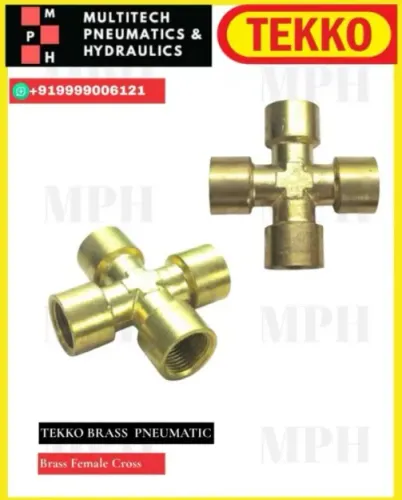
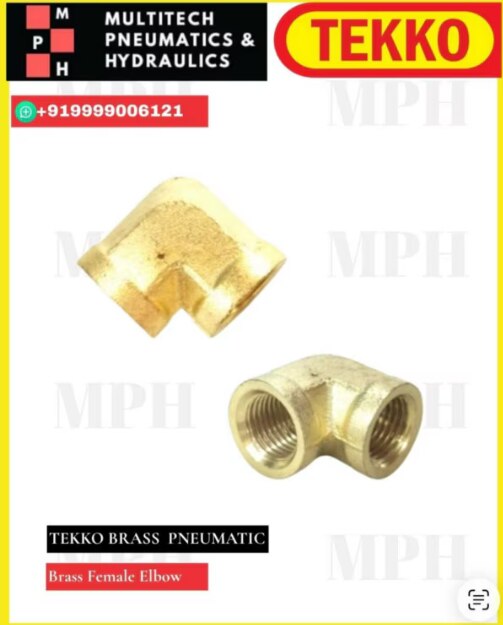
 | TEKKO BRASS PNEUMATIC TEKKO BRASS PNEUMATIC Brass Female Elbow View product → |
Frequently asked questions
Which thread details must you specify for a pneumatic brass female elbow?
Specify the thread standard, thread form, size and outlet interface. State whether you need NPT, BSPT, BSPP or a metric thread, then identify the tube or port connection on the other end.
How do you check whether a brass female elbow will fit a tight space?
Compare the tube outside diameter, port dimensions, elbow centreline and required wrench clearance with the available space. Check the fitting drawing rather than relying on a nominal 1/4-inch description.
What operating conditions should you check before choosing a brass female elbow?
Check the fitting’s pressure rating and temperature range against your pneumatic circuit. Also confirm that the brass, seal material and finish suit the air quality, moisture, oil and any cleaning chemicals present.
How should you seal and test a brass female pneumatic elbow?
Use the sealing method specified for the thread type, keep sealant out of the air passage, tighten without stressing the body and test the completed connection at operating pressure for leaks.
Keywords